
The Art of Illumination: Exploring Possibilities of Museum Lighting
Welcome to EQUATION Lighting Design article series, where our team members dive into a specific topic they want to explore and analyze.
Today’s article is curated by Panagiotis Stamidis , who talks about the art of illumination, exploring the possibilities of museum lighting.
Museum lighting is an art form in itself, a delicate interplay between illumination and shadow, responsible for the viewer’s experience of art. Stepping into a museum, one can observe the interplay of light and artwork, each stroke of brilliance revealing new depths to the pieces on display. Light has a great impact on the general experience of the exhibition’s atmosphere and is a powerful tool for revealing emotions. Light is the artist’s assistant, the one that can support the artwork, to reveal its texture, colours and forms and it can be either the protagonist of an exhibition or it can be the subtle tool of just properly reeling the beauty of art.
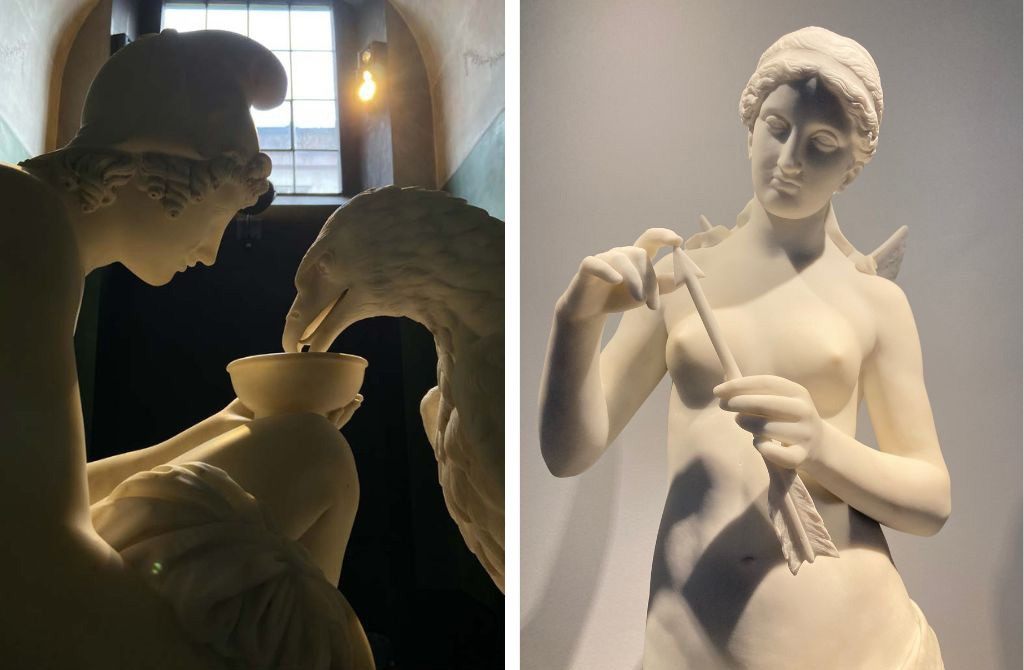
Sculpture in Thorvaldsens Museum and Ny Carlsberg Glyptotek museum. Photo by Panagiotis Stamidis and Antti Heikka.
In the article “Interpreting Art with Light: Museum Lighting Between Objectivity and Hyperrealism,” (2020) Thomas Schielke highlights the significant role of lighting in shaping visitors’ perceptions and interpretations of artworks, emphasizing its power to engage viewers both emotionally and intellectually. Through six distinct lighting categories, Schielke explores methods and technological tools that enhance artwork appreciation and atmosphere. These categories range from objective reception, which uniformly illuminates exhibitions for a realistic presentation, to dynamic artwork communication, where lighting dynamically changes intensities, colours, and spectrum, creating a lively atmosphere.

Ny Carlsberg Glyptotek museum. Photo by Panagiotis Stamidis and Antti Heikka.

Ny Carlsberg Glyptotek museum. Photo by Panagiotis Stamidis and Antti Heikka.
During my master thesis, in collaboration with Antti Heikka , we were fascinated by the dynamic artwork communication and how light could not only illuminate art but also shape the viewer’s experience. Drawing inspiration from the historical context, we delved into the evolution of museum lighting, from the natural sunlight that once illuminated ancient sculptures to the modern electric illumination in contemporary galleries. We were particularly inspired by the context of ancient sculptures, originally intended to be displayed outdoors and illuminated by the ever-changing dynamics of sunlight. This inspiration led us to develop a lighting concept for sculptures that could “mimic” the dynamics of natural light.

Sculptures in Thorvaldsens Museum. Photo by Panagiotis Stamidis and Antti Heikka.
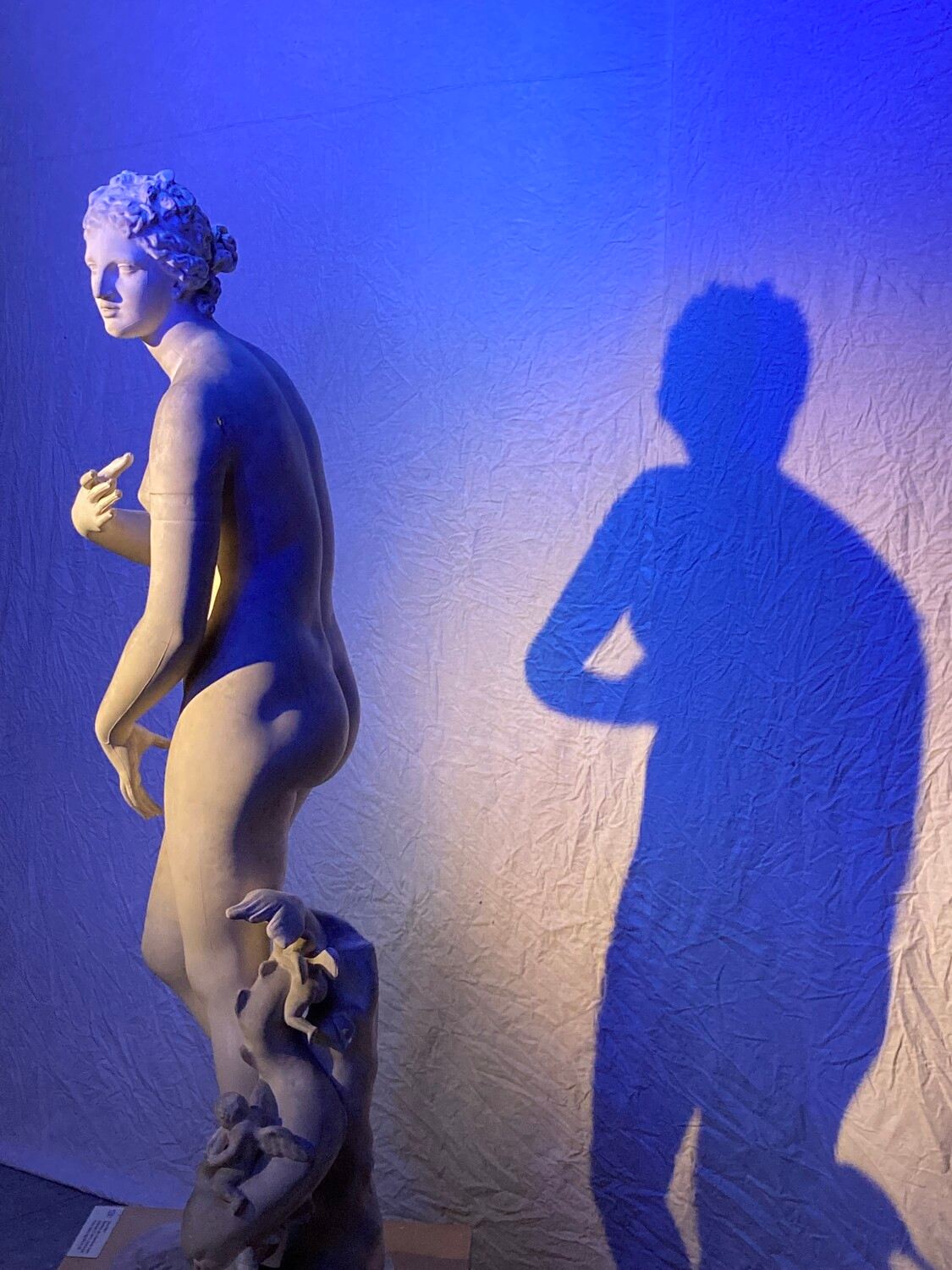
After extensive research and experiments, we implemented a system with multiple luminaires positioned at various angles, some aiming directly at the artwork for direct light and some directed towards a reflector positioned above the sculpture to provide diffused light. The luminaires were controlled for colour and intensity using DMX technology aiming to “replicate the cycle of sunlight” using electric light. The outcome was the illumination of a sculpture of Venus in the Royal Cast Collection of Copenhagen. Through precise placement and control of the fixtures, the lighting dynamically moved around the sculpture, casting distinct shadows and revealing various forms and textures. Participants in the experiment found the lighting effects engaging and captivating. They remarked on the ability to perceive the sculptures differently under different lighting conditions, with the sculpture sometimes appearing subtle and at other times powerful.

Sculpture of Venus. Lighting Concept Experiment. Photo by Panagiotis Stamidis and Antti Heikka
My master thesis journey deepened my understanding of the significant role of museum lighting in art presentation and visitor experience. It highlighted how light can be manipulated in different ways to enhance an artwork, enriching viewers’ understanding and appreciation. Exploring inspiration from various sources allowed for the creation of innovative concepts that fostered new engagements with artworks and novel presentation methods. As museums continue to evolve into immersive environments, lighting remains a crucial tool for innovation. Whether orchestrating theatrical spectacles or subtle enhancements, light remains the magic tool to shape visitors’ journeys and strengthen their connection with art.
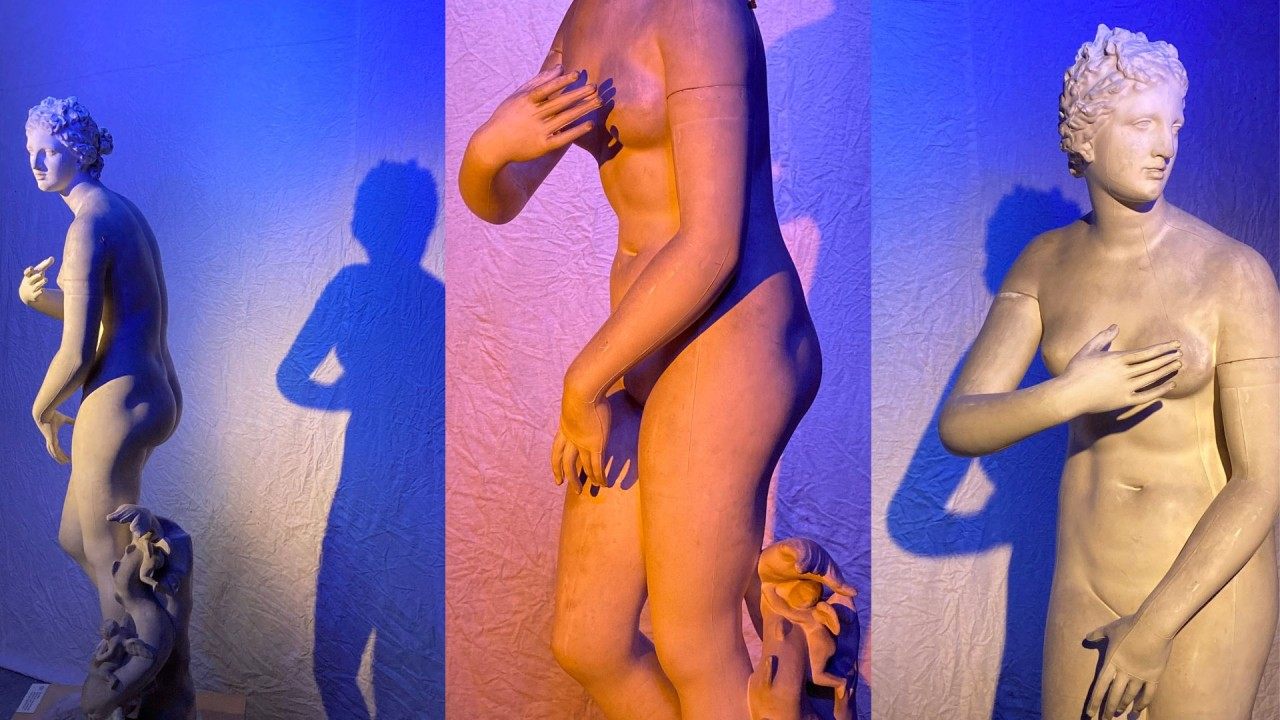
Sculpture of Venus. Lighting Concept Experiment. Photo by Panagiotis Stamidis and Antti Heikka.
We welcome you all to be part of our blogs by adding your thoughts in the comments section below! You can check the first issue of the article series, “Light Art with Intent” by Alejandro Lizarralde , the second issue, “Concert Stage Lighting – when light captivates the mind, body, and soul” by Dhara Mansata or the third issue, “Rebuilding Architectural Volumes through Lighting in Archaeological Settings” by Paola Petkova